
Careers
Preparing pupils for life beyond St Richard’s
At St Richard’s, Careers Education and Guidance prepares pupils for life beyond full-time education. It is available to all pupils and is central to our commitment to helping every pupil flourish and succeed.
Our programme supports pupils to explore their interests, recognise their strengths and make informed decisions about their future. We aim to inspire and motivate pupils while providing clear, impartial information, advice and guidance.
We believe that every pupil has the ability and potential to grow and achieve. Where barriers exist, we work closely with pupils and families to ensure that every pupil is supported to achieve their potential and move forward with confidence — whether that next step is sixth form, college, an apprenticeship or employment.


CAREERS LEAD
Careers education at St Richard’s is led by our Careers Lead, who oversees the development and delivery of the programme.
For further information about careers education, guidance or provider access, please contact:
Mrs Lyons
Careers Lead
mrslyonsc@strichardscc.com
01323 721310

How Careers Education Develops at St Richard’s
We aim to enable all pupils to flourish – academically, socially and spiritually – growing together in friendship and in faith.
Support by dedicated staff, strong pastoral care and a shared sense of purpose, our pupils leave St Richard’s well prepared for the future challenges and opportunities ahead.
By the End of Year 9
By the end of Year 9, pupils will have:
· Developed an understanding of how to make informed decisions about GCSE subject choices
· Begun to recognise their skills and strengths, such as teamwork and meeting deadlines
· Received guidance and advice from key staff, including Form Tutors, Pastoral Leaders and the Careers Lead
· Used careers websites and labour market information to explore areas of interest
· Reflected on and recorded their achievements, including progress towards target grades
· Had opportunities to meet employers through workshops and the school careers fair
· Been able to use the Careers section in the school library
This ensures pupils are well prepared to make informed choices as they move into Key Stage 4

By the End of Year 11
By the end of Year 11, pupils will have:
· A clear understanding of post-16 education, training and apprenticeship pathways
· Knowledge of a wide range of further education, training and career opportunities
· Experience researching and comparing options
· Accessed personalised careers advice and guidance
· Used careers websites to explore areas of interest
· Completed work experience
· Taken part in a mock interview with an employer
· Reflected on their skills and strengths, including teamwork and meeting deadlines
· Recorded achievements such as academic progress and leadership roles
· Developed confidence, resilience and readiness for adult life
· Regular access to the Careers section in the school library
Our aim is that every pupil leaves St Richard’s prepared to take the next step with clarity, confidence and ambition.
Personal Guidance and Equal Access
Every pupil has access to impartial careers advice.
The Careers Lead and pastoral team provide:
· One-to-one guidance interviews
· Targeted support for pupils who may face barriers to progression
· Additional guidance for pupils with SEND
· Support with applications, interviews and transition planning
We are committed to ensuring equal access to high-quality careers guidance for all pupils.

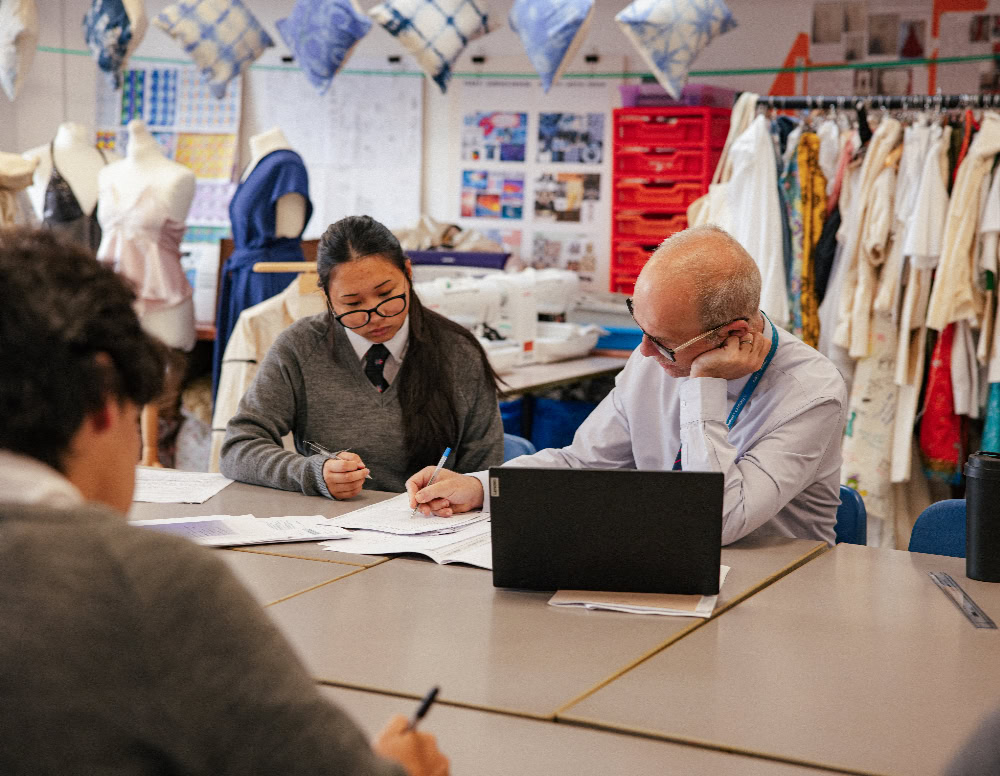
Career Share – Parents and Carers
We value the support of parents and carers in helping pupils understand the world of work.
Through the Career Share initiative, parents and carers are invited to share their experiences, career journeys and professional knowledge with pupils. This may include speaking at events, supporting workshops or contributing to careers activities.
If you would like to get involved, please contact the Careers Lead.
Careers Policies
You can find further information about careers education at St Richard’s in the documents below:
- Careers Education Policy
- Provider Access Statement
- The Impact of the Careers Programme
Additional statutory information is available on our Statutory Information & Policies page.

Careers Information & Resources
Practical guidance to support pupils and families at each stage.
Applying for College or Sixth Form
Choosing your subjects
Find out which A levels you need to get to the next step? E.g. what do you need to get onto the university course / career you want?
Do an internet search for the course requirements for you chosen course/career.
It is always worth finding out what universities generally want for their courses or for specific courses; you can find this information by searching on the UCAS website: https://www.ucas.com/
You can also look at the requirements for the Russell Group Universities: https://www.informedchoices.ac.uk/
A good suggestion is to choose 3 subjects relevant to your career or university choice and 1 subject you know you will enjoy which might not be relevant to keep your enjoyment levels up. Colleges often like you to choose 4 subjects and perhaps drop one course if you find it too hard.
Think about doing an apprenticeship at college, most colleges offer them. Please refer to the page on apprenticeships for more information.
Choosing your College
Have a look at the colleges in the local area, consider:
Do they run the courses you need to do?
Can you afford to travel to the college each day?
Can you get up early enough to get there?
Don’t worry if your friends are not going to the college you are thinking about, you will probably make new friends anyway.
Go to the open evenings / guided tour days. If you miss these, contact the college and go and see it anyway.
Trying using the UCAS progress website, you can explore and compare the courses available at colleges, sixth forms and training providers across the local area. You can search by postcode, subject, and school, college or work-based learning provider for courses for 16-19 year olds.
Applying to a College
Talk about your college application with your parent / carer and get them to check your application for errors / spelling mistakes.
Most applications are made through the Careers East Sussex website. You will have received your username and password via email. Please ensure that you have had your application checked before you submit.
Apprenticeships
Depending on the apprenticeship offered, you can earn money while being trained on the job and get qualifications including a degree, A-levels, NVQs, etc.
The apprenticeship website is huge as it is for apprentices, employers, parents, colleges and more, so here are some sections you might be interested in if you just want a quick look:
Types of apprenticeship if there are no current vacancies, remember to register and set up an email alert.
Videos & Pictures videos of interviews and images in the media gallery
Search for an apprenticeship in the local area by searching for Apprenticeship / East Sussex
Newsletter
Apprenticeships on Twitter Follow @Apprenticeships
Apprenticeships on Sussex website
Links:
https://www.findapprenticeship.service.gov.uk/apprenticeshipsearch
http://www.apprenticeships-in-sussex.com/
Labour Market Information
Employablity
What is employability?
Employability skills are defined as:
A set of attributes, skills and knowledge that all labour market participants should possess to ensure they have the capability of being effective in the workplace to the benefit of themselves, their employer, and the wider economy.
Academic skills: includes specialist knowledge, ability to apply knowledge, logical thinking, critical analysis, and problem-solving, written and spoken communication, ability to use numerical data, computer literacy and research skills.
Personal Development Skills: includes self-confidence, self-discipline, self-reliance, awareness of strengths and weaknesses, creativity, independence, knowledge of international affairs, desire to go on learning, ability to reflect, reliability, integrity, honesty and regard for others.
Enterprise or business skills: includes entrepreneurial skills, ability to prioritise tasks, time management, interpersonal skills, presentational skills, ability to work in teams and leadership skills, commercial awareness, flexibility, innovation, independence and risk-taking.
So what does employability mean for you?
Employability is about much more than just getting your first job it’s about having a positive self-image and presenting yourself successfully, both as you leave school and throughout your life.
Your skills, knowledge and personal attributes and the ability to convey them effectively all contribute to your employability as do your personal circumstances and labour market conditions.
You probably already know that you need to get good results, complete some work experience and improve your skills in order to get a good job. As part of this process you will take part in a mock interview in Year 10.
Work Experience
Year 10 pupils have one week block placement in the summer term. This week is particular valuable as it really gives the pupils a chance to experience the world of work. The week should not necessarily be thought of as a ‘Career Taster’ week, as there are some organisations that will not take pupils under the age of 16.
All placements are organised via the Careers East Sussex database and pupils will have usernames and passwords issued to them.
Qualifications Framework
Volunteering
Volunteering is simple. It is about giving your time to do something useful, without getting paid. It is a useful way of getting experience which is so valuable when applying for jobs. It can also be a great way to: meet new people, learn new skills and gain useful experience.
The range of opportunities is huge and there is no age limit. Whatever skills and experience you have, there is something that you can do.
Once you start volunteering you should usually expect:
- A clear idea of what your role will be
- Appropriate training and support
If you are not clear about anything, do not be afraid to ask someone.
Top Tips
Hints to help you start volunteering:
Think about what you want from volunteering: new skills, fun, a chance to contribute to a cause?
Think about what you have to offer: enthusiasm, work skills, life skills?
Work out roughly how much time you have to give, and how many times a week or month.
Remember that anyone can volunteer: whatever your skills, experience or background you should be able to find an opportunity.
Ask questions: do not be shy about asking questions as you go through the process of applying for an opportunity.
Just try it: often the most difficult part of volunteering is making the first move, so be brave!